
Tissue-selective Electro Acupuncture Therapy that is a one of the contemporary Japanese acupuncture techniques which are based on scientific theories.
In the 1970s, medical research began on the anesthetic effects of low-frequency electric current using acupuncture needles as electrodes.
From the 1980s, research on animals and healthy subjects was conducted in Japan as basic research for clinical application of low-frequency acupuncture stimulation. In 1972, Dr. YOSHIKWA Keishi of Tsukuba University in Japan began researching the effects of low-frequency acupuncture stimulation on the human body at Tsukuba University, and applied low-frequency stimulation using needles as electrodes to clinical practice, which he called “Acupuncture Anesthesia treatment.
In 1984, the name was changed to “Electric Acupuncture Therapy," and in 2019, the theory was concretely recalled in the form of Tissue-selective Electro Acupuncture Therapy (TEAT), which is a new designation.

In TEAT, the acupuncture target is anatomically present tissue (skin, muscle, nerve, subcutaneous connective tissue) selected by the practitioner; it does not select acupoints, meridians or energy points as in TCM or other conventional methods. This is because their existence is not known scientifically at all.

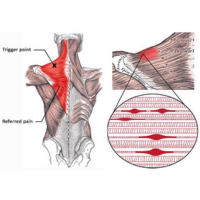

The concept of the cause (pathology) of pain and other symptoms
At TEAT, the causes of symptoms are analyzed and estimated based on physiological and pathological analysis of modern medicine. For example, pain due to inflammation, pain due to insufficient local blood circulation (circulatory disturbance), spasm of the dominant muscle due to overexcitation of peripheral motor nerves, and prolonged pain due to increased sensitivity of peripheral sensory nerves.
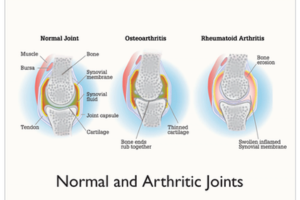
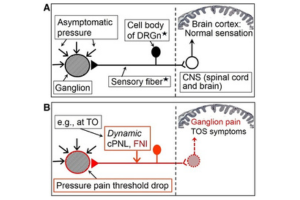
In order to determine the treatment site by "anatomical site (tissue)," the patient's complaints must be medically determined (pathophysiology). Therefore, the collection of physical findings is enhanced and the treatment (stimulation) site is determined based on the results of physical examination and biological observation performed at the bedside.

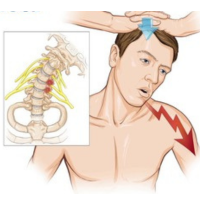

The main stimulation site is often the muscle (as revealed by palpation) in the local area where the symptoms are manifested. Other acupuncture sites may be included if there is evidence of abnormal nerve function. In addition, to correct muscle overstrain or fatigue that has spread to other parts of the body due to pain, stimulation may be applied to kinetically related areas, albeit at a distance from the site of pain.
When identifying the acupuncture site, we often palpate the tissue identified by the examination, and then determine the site of greater reaction (induration or tenderness) within the same tissue. On the other hand, if the target tissue is a nerve, the acupuncture needle is inserted at that site if it can be palpated. If it cannot be palpated, the acupuncture needle is estimated from anatomical landmarks and the patient's reaction (feedback) produced by the acupuncture needle is used to determine the site.
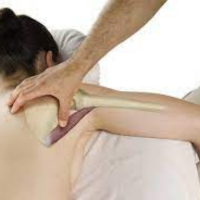
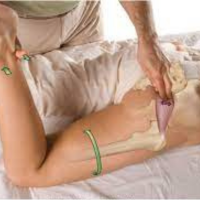
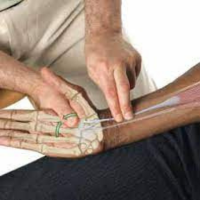
In musculoskeletal diseases, acupuncture needles are inserted directly into the diseased tissues (muscles, nerves, subcutaneous connective tissues, ligaments, etc.), and electrical stimulation of a certain frequency is selected according to the targeted biological response. Specifically, 1 to 10 Hz is used for vasodilation, analgesia, and sedation, while 30 to 100 Hz is selected for anti-inflammation, vasoconstriction, and excitatory effects.
When 1-Hz stimulation is being given, the rate of stimulation is about the same as your pulse rate, and you should feel as if someone is tapping the area with their fingertips.
When 100-Hz stimulation is given, it feels as if the patient is being hit with a vibrator that is vibrating continuously.
The intensity of the stimulation is set at a level slightly lower than the maximum the patient can tolerate.
The duration of stimulation is usually 15 minutes, but may be increased or decreased depending on the patient and his or her condition.

In musculoskeletal diseases, we clinically apply (1) low-frequency electroacupuncture “Muscle Pulse” targeting muscles to improve intramuscular circulation and reduce muscle stiffness and shortening, (2) low-frequency electroacupuncture “Nerve Pulse” targeting nerves to normalize the somatic nerve pain threshold, and (3) low-frequency acupuncture “Facet Joint Pulse" targeting vertebral facet joints and the soft tissues around the vertebral foramen (excluding the anterior branch).